
Acquisition advice for founders who want to build something more valuable.
Acquisitiv is a buy-side acquisition advisory firm for UK founder-led businesses. We help owners understand where acquisition could create value, build a clear acquisition thesis, and move into the market with discipline rather than reacting to whatever happens to appear.
Most acquisition advice starts too late.
Too many founders only get serious advice once a target has appeared, a broker has sent a teaser, or a competitor has already moved. By then, the buyer is reacting.
The wrong target gets too much attention. The numbers are accepted too quickly. Integration is treated as tomorrow's problem. Momentum starts to replace judgement. And the founder ends up in a process shaped by the opportunity rather than one they designed.
Acquisitiv exists to give founders a more disciplined route. One that starts with the thesis, not the target. One that builds the acquisition capability before the process begins. And one where the adviser's job is to challenge as much as to support.
The thesis comes before the target.
Acquisitiv does not start by asking what is for sale. We start by understanding what kind of acquisition would make the buyer stronger.
A target only makes sense if it supports the thesis: stronger market position, better capability, wider geography, deeper customer access, improved margin, recurring revenue, or greater eventual exit value.
17 years across finance, M&A, turnaround, and operating roles.
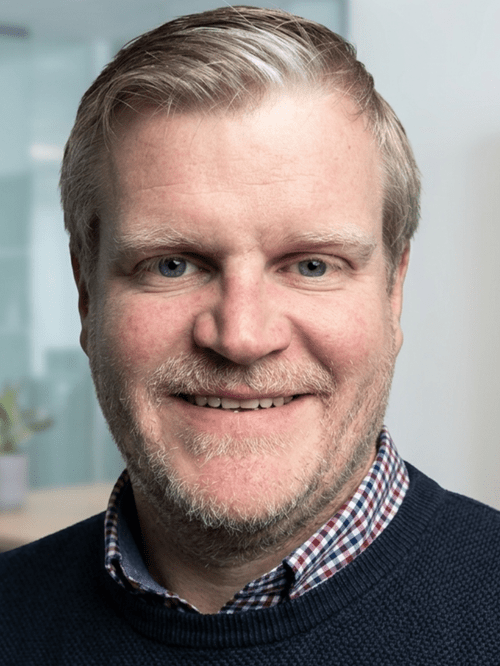
Mike Ferguson founded Acquisitiv after 17 years across audit, capital markets, operational finance, turnaround, and M&A advisory — spanning large institutions, founder-led businesses, and boutique advisory work.
That mix matters. Acquisition is not just a transaction. It is a strategic, financial, operational, and human decision. The numbers have to work. The business has to be ready. The founder has to stay in control. And the deal has to make the company stronger after completion, not just larger on paper.
"When you work with Acquisitiv, you work with me. Every call. Every meeting. Every line of analysis. If the deal is wrong, you will hear it from me, not in a footnote."
Five stages. Senior-led throughout.
Every engagement is different, but the structure is consistent. We move through these five stages, stopping at any point if the logic stops making sense.
Founder-led businesses at a specific strategic moment.
Acquisitiv is best suited to UK founder-led and owner-managed businesses, typically between £5m and £50m turnover, where acquisition could accelerate growth, strengthen market position, or improve eventual exit value.
Not for every founder. Not for every deal. For the founder who wants to move deliberately and wants an adviser whose job is to make sure the decision is the right one.
See Who We Work With- A large corporate finance team with junior staff running the work
- A business broker with a list of businesses for sale
- An adviser whose fee depends entirely on a deal completing
- A firm that starts with what's for sale rather than what should be bought
The first step is one 30-minute conversation.
One 30-minute conversation. A company-specific briefing prepared afterwards. A clear view of whether acquisition deserves serious attention and what the next move could look like.
Complimentary for selected founder-led businesses. No obligation to continue. You keep the briefing regardless of what you decide next.
Book Your Briefing